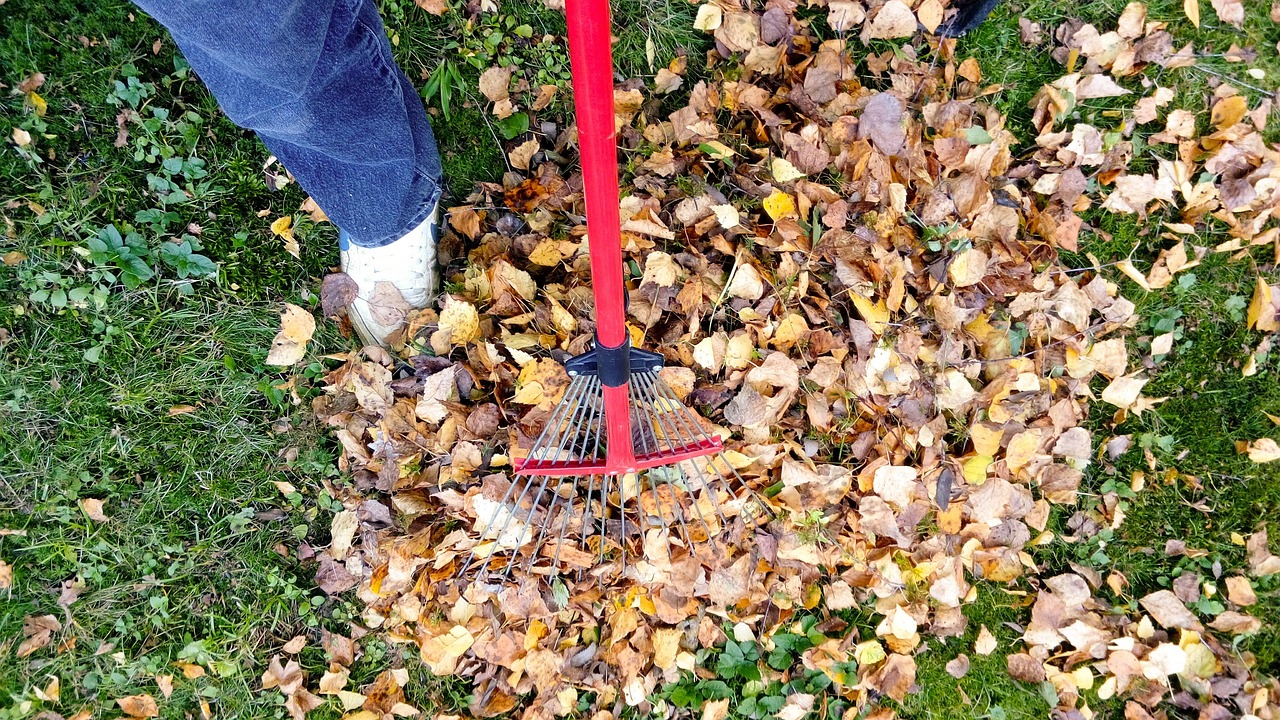
 It can be a heated debate — rake the leaves or not? For some, having a leaf-free yard in the fall is an aesthetic goal, while others like the natural look. Raking isn’t a beloved fall pastime for most, but before you feel obligated to do it, check out these benefits of leaving leaves on the ground. As you’re tackling several end-of-season garden chores, some recent research might sway you. It shows several benefits to leaving fallen leaves on your lawn and garden over the winter.
When you don’t rake or leaf-blow in the fall, this University of Maryland research shows how that affects the soil and the biological life in your yard, lawn and garden in a positive way. To test the no-rake hypothesis, researchers chose several lawns and placed emergent traps over areas where one part of the lawn was raked, and the other part of the lawn was left covered with autumn leaves. They left them there and tested in the spring. In the areas where leaves were left on the ground, 40% more butterfly and moth larvae and adults emerged in the spring. Spider populations also increased by 56% as well as 24% more beetles. This research indicates that a lot of beneficial insects — aka the “good guys” that keep insects that harm your lawn and garden at bay — and biological life lies underneath the leaf layer. And beneficial insects and arthropods are using the leaves as an overwintering site. These essential insects help pollinate plants, trees and shrubs and help them grow better by reducing the number of pest insects. Plus, the Maryland researchers also delved into the carbon-capturing benefits when leaves are left to break down over the winter and into the soil.
Still, it’s a big ask to leave the rake and blower behind and embrace a leafy yard. Ease into it slowly with these methods!
How to ‘leave the leaves’
- As long as the leaf layer isn’t too thick, let the leaves drop on the lawn and walk away! Nature will do the rest and the leaves will decompose over the winter.
- Shred up the leaves, and use them to protect overwintering, tender perennials, like lavender. Do this by putting a ring of chicken wire around the plants and put the shredded leaves inside.
- Move leaves from the lawn to a leaf mold pile. That’s a pile that slowly rot down and turn to rich compost.
- If you have a heavy layer of leaves, say from oak leaves which take longer to break down, relocate some of the leaves to places where you want to encourage that biological life, like a pollinator garden, or a perennial flower garden.
An important note: If you shred leaves up with a mower, it’s almost the same as removing the leaves altogether and doesn’t provide the habitat the essential insects need.