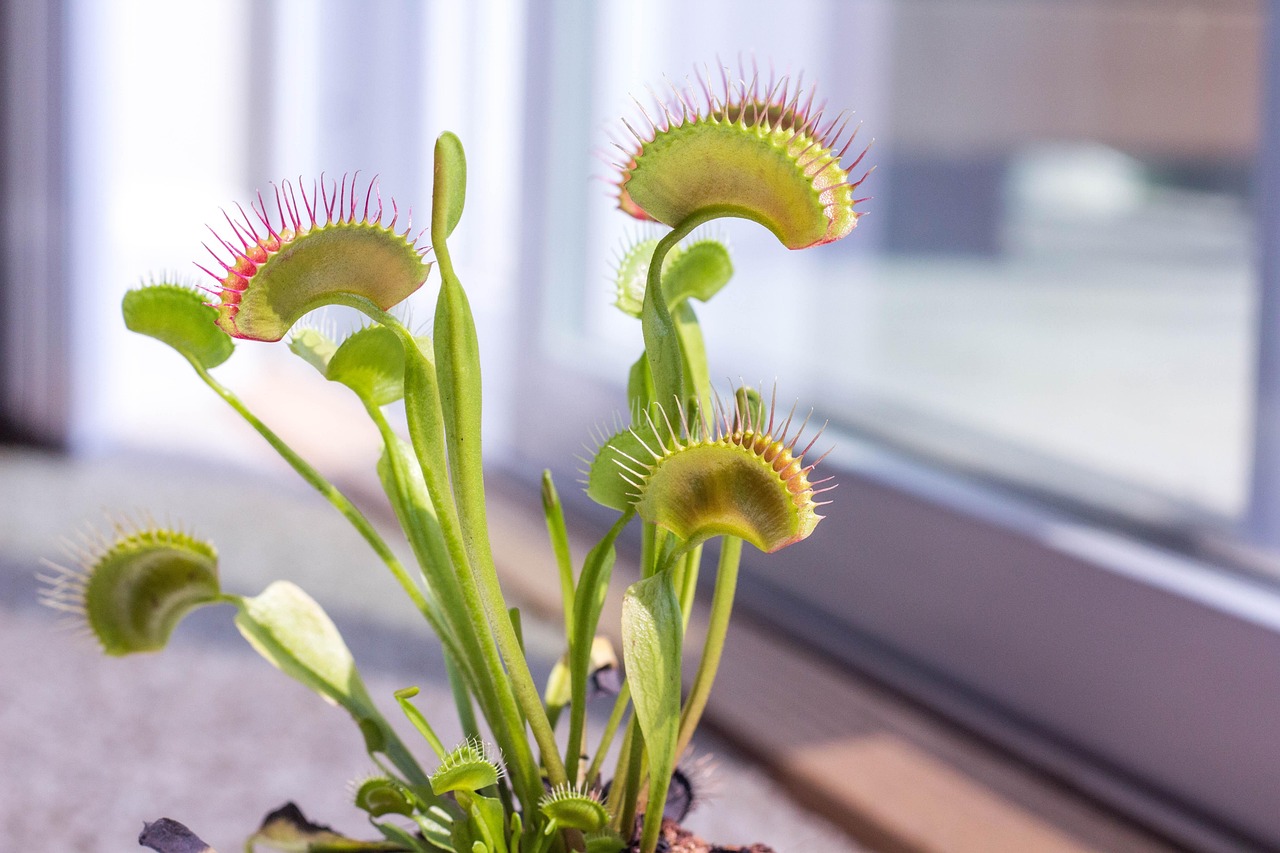
 Certain plants like carnivorous pitcher plants and sundews don’t consume a plant-based diet in order to grow and thrive.
Pitchers, sundews and the infamous Venus Fly Trap have all evolved to eat insects as a means to enrich their diet. Though not native to Vermont, some of the bigger carnivorous plants will eat larger critters, like frogs and lizards. These plants all grow through photosynthesis, but they often need to supplement their diet with insects because the soil they grow in isn’t nutrient-dense. Fly traps are native to the East Coast near the Carolinas, but pitchers and sundews grow in wet areas in Vermont near bogs and streambanks.
Growing some carnivorous plants at home can be fun, though keep in mind: these plants are finicky. And Venus Flytraps – once hugely popular as house plants – are now actually listed as vulnerable to being endangered due to habitat loss and over-harvesting. Instead, look for sundews or pitcher plants to grow indoors!
Inside your home, as in nature, they’ll thrive best in a high-humidity situation. If you have a terrarium, that might be the perfect spot. Or you can put the plants still in their containers on a pebble tray filled with water. These bug-eating plants are also just fine with the temperature you keep your household. They will grow and thrive if your house is in the 60s or 70s indoors during the day and cooler at night. Some will even go dormant in the winter and drop their leaves. If that happens, no need to fret, as the leaves should grow back.
And if you’re growing carnivorous plants indoors, note that they really like sun. Place them in a south-facing window or under grow lights. You’ll want to provide just the right soil mix, too. For best results, use two parts sphagnum peat moss and one part sand. For an indoor pitcher plant, you might even want to mix in extra perlite or vermiculite for better drainage.
A really vital part of your indoor carnivorous plant adventure is knowing when and what you water them with. These plants don’t like the chemicals and minerals in tap or hard water, so avoid those. Instead, try distilled water or special bottled water.
And the biggest tip of all, of course is what you’re feeding them and how often. Though these house plants look vicious, they don’t have a voracious appetite! As tempting as it may be, limit feeding to one insect or spider per week.